A major focus of the lectures this week has been the role of land management in conservation. We talked about modifications are made to the landscape by conservation workers to promote biodiversity, such as the targeted removal of invasive species and planting of native species. We also spent a lot of time discussing how different stakeholders determine the future of a natural area, something that will continue next week with a mock county planning commission meeting we have planned as a class activity.
For the field trip this week, we explored a couple new locations in Shenandoah National Park. However, I will only be discussing one here as I feel only it is relevant to the subject of this blog entry. The place in question is an area known as Big Meadows. And it definitely lives up to its name.
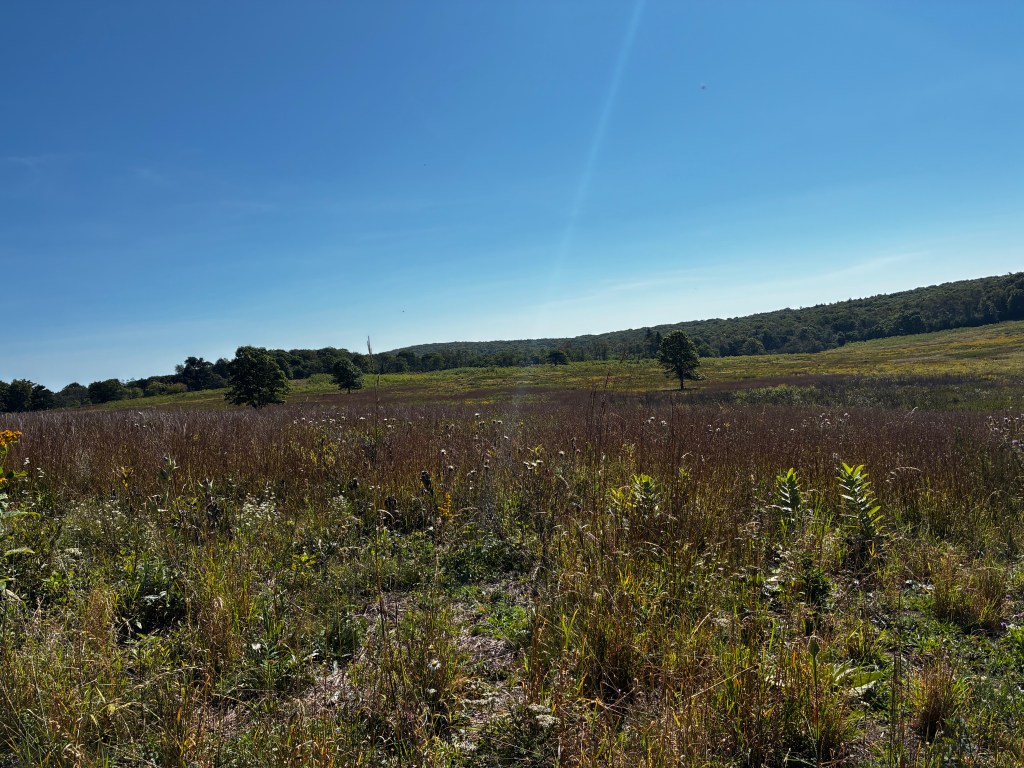
Natural as it may appear, Big Meadows is in fact a human creation, the result of a very long history of land management. It is thought to have been maintained as a clearing by Indigenous peoples going back as far as 10,000 years, who kept it open to encourage game animals like deer, elk, and possibly even bison. After European colonizers arrived and displaced the Native Americans, they continued to keep the landscape open to be used for cattle grazing. Even since the land became part of a national park and agriculture ceased, the park service has continued to prevent forest from reclaiming the meadow. Apparently in the early days, this was partly to help evoke the atmosphere of a western national park, at a location that would much easier to reach from Washington DC. Today, another reason for its continued maintenance is providing habitat for plant and animal species that prefer more open environments.
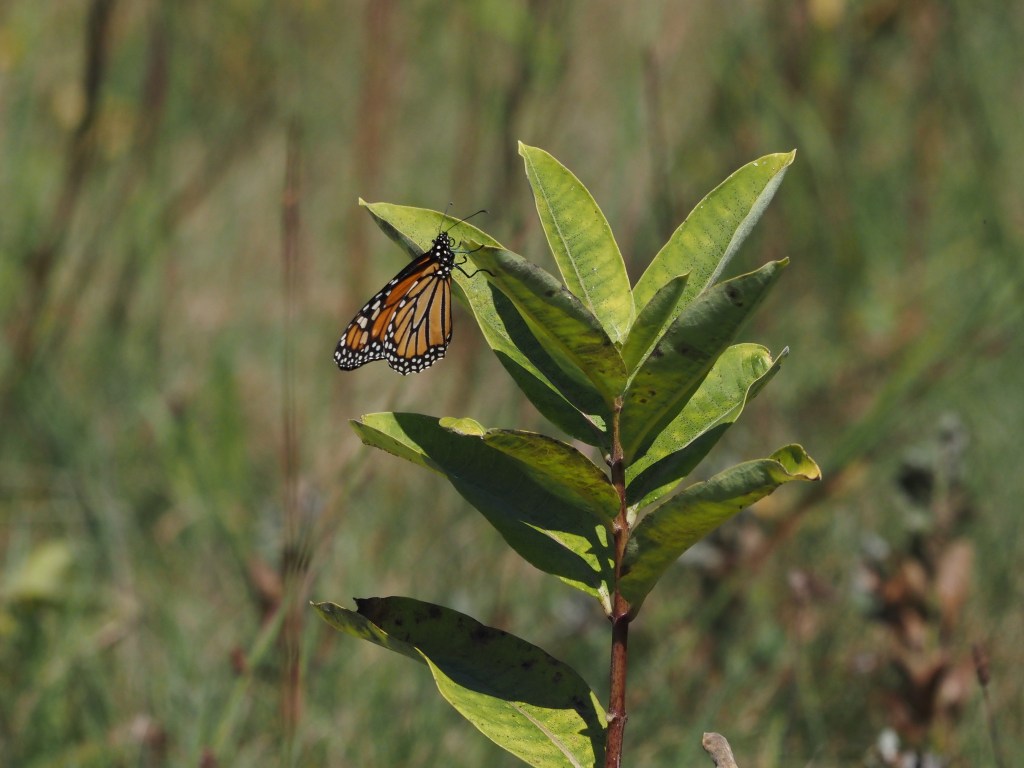
Monarch butterfly on a milkweed in the Meadows.
We also had some speakers who work in conservation land management come in. People from Virginia Working Landscapes came in to share about how they monitor biodiversity on landscapes in the state and what they do to help preserve it, such as working with farmers to help prevent the harvesting of hay from harming grassland birds The official land manager of the SCBI also came in to discuss how the staff work on site to encourage biodiversity, with a focus on plant life. He talked about some notorious invasive plants around here and what is done to manage them, and then we went on a walking tour around campus and a site across the road, during which he showed us examples of local native and invasive plants firsthand and taught us more about the efforts of the land managers here. One thing he showed us that was particularly interesting to me was a grove of American chestnut trees, a native species that was driven to near extinction because of disease but is now being grown with some success at the SCBI.
I am certainly grateful that I got to learn more this week about the intricacies of conservation land management and especially for the opportunity to hear about it from people who work in the field themselves.
 SMSC Fall 2026 Adventures