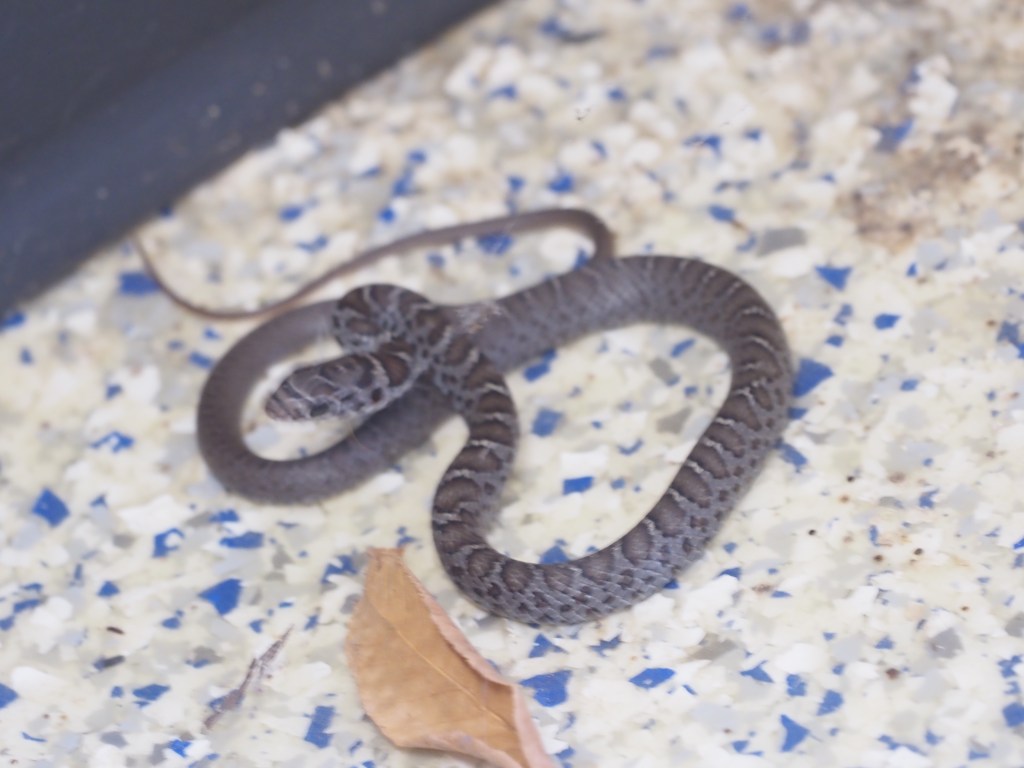
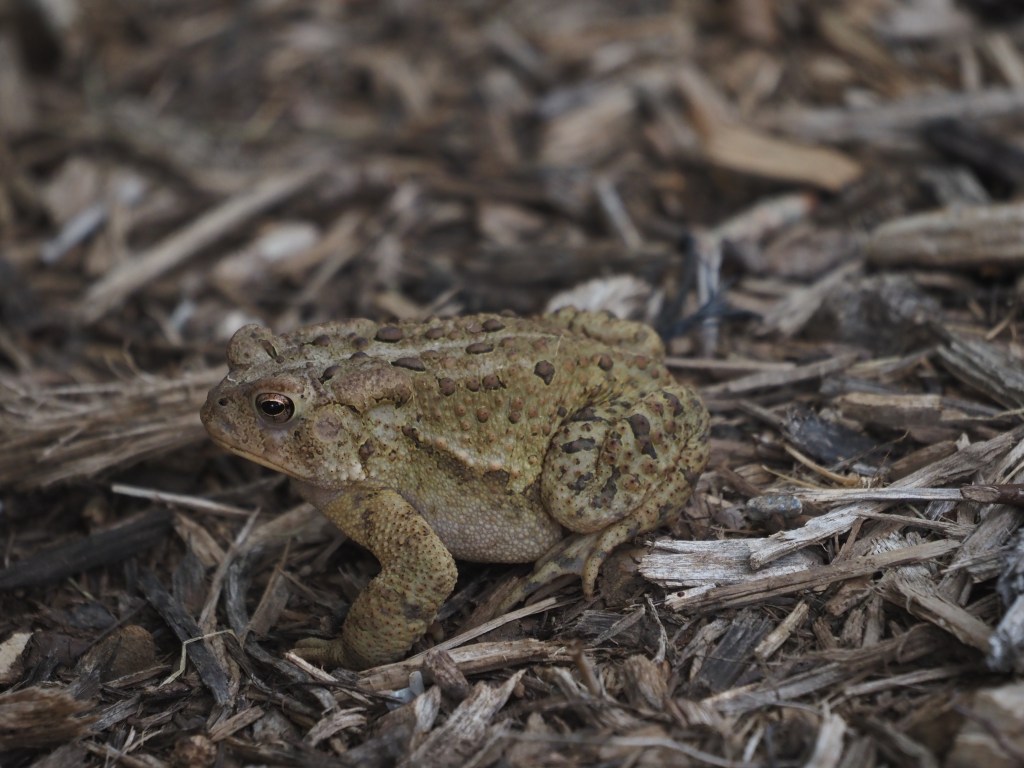
This week we did a lot of going out, looking for animals, and recording what we found. This was to give us first-hand experience with ecological monitoring, which is essential for conservation. To have any idea of what steps should be taken to preserve the biodiversity of an ecosystem, you need to know what species are in the ecosystem. Our field work this week focused mainly on herps (reptiles and amphibians).
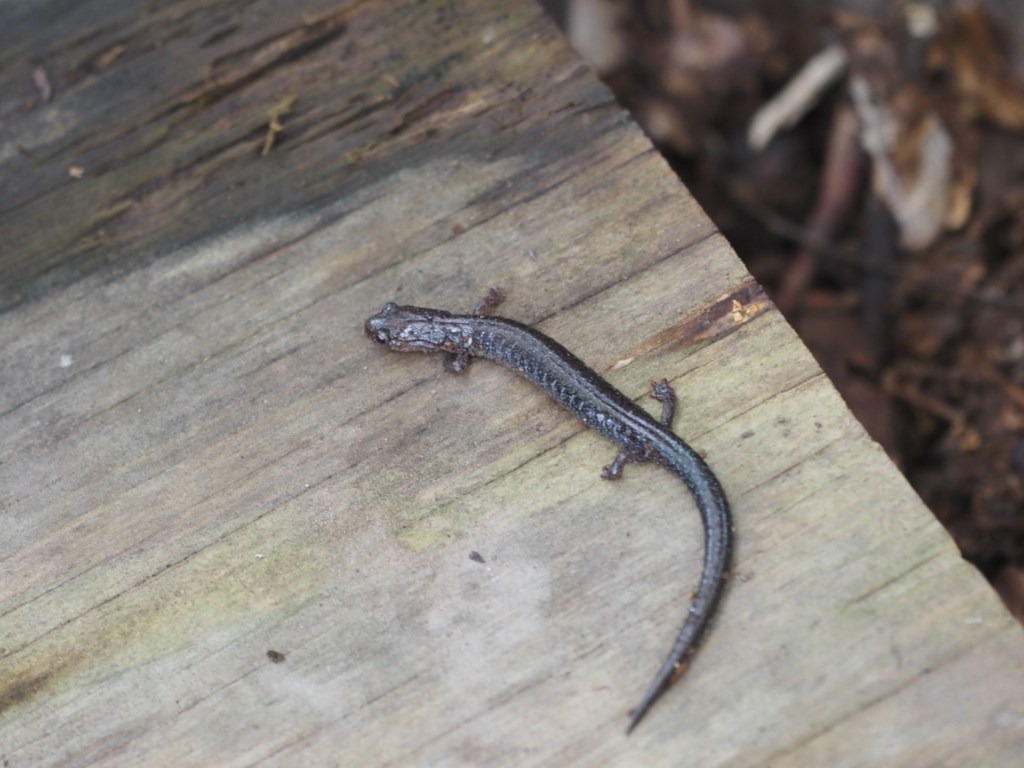
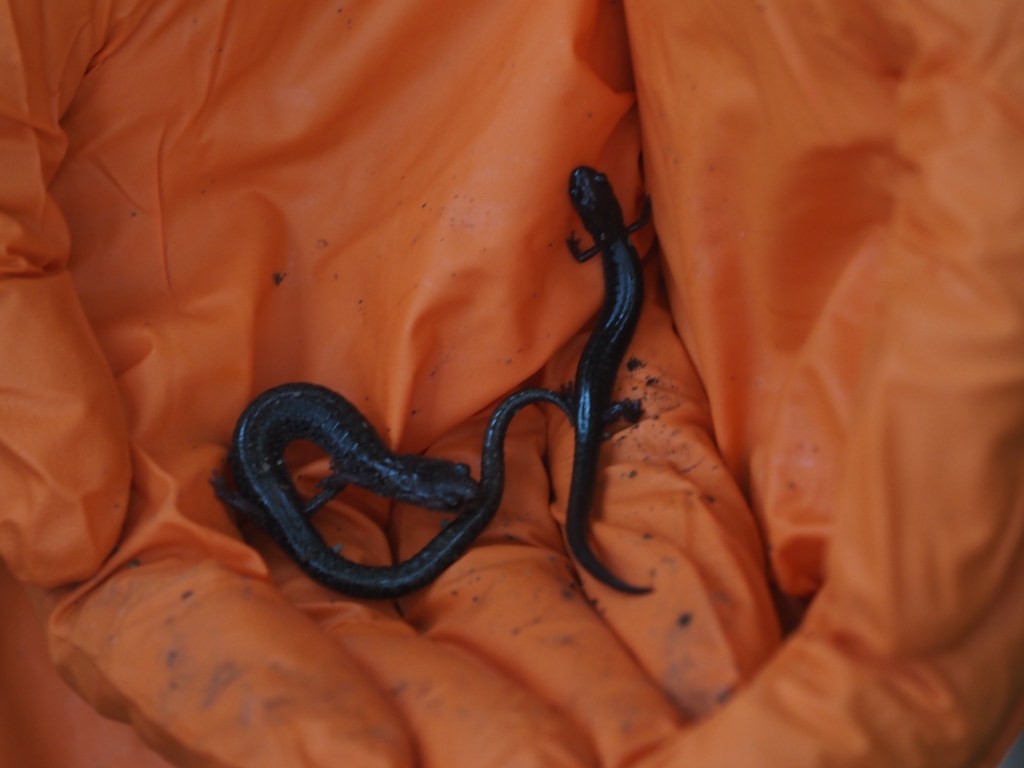
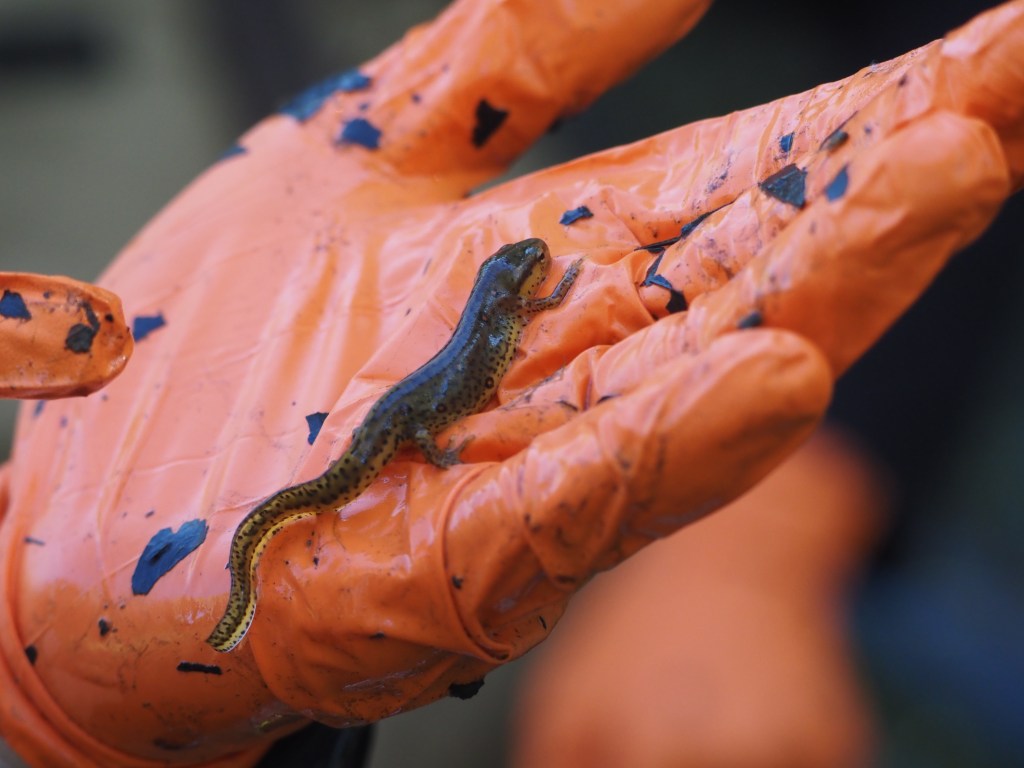
We went to a tract of forest on SCBI’s property where a series of small wooden boards had been set up for salamander research. The salamanders use the boards for shelter, and they can be easily flipped over and put back without harming them and the other organisms that hang out under them. Us students divided ourselves up into several teams and got to work looking under the boards (of which there were 42 sectioned into 7 “lines”). Across all the lines, we found more than 50 salamanders (all red-backed) in total! It’s no wonder that this species is the most abundant vertebrate in eastern forests.
The class then headed over to a pond, where each team set up a trap called a minnow net that is built to allow aquatic vertebrates to swim in – but not out. The traps were left out overnight, and in the morning we returned to see what had swum in. We were specifically interested in seeing what amphibians we would get. In my team’s minnow net, after releasing several bluegill (since we weren’t monitoring fish), we counted eight green frogs (seven tadpoles and one adult) and four American bullfrogs (all tadpoles). After recording the data from the minnow net, we then deployed a tool called a sweep net. Whereas the minnow net was a passive tool, since we left it out and waited for creatures to come to it, using the sweep net was an active tool, since we actively dunked it in the water and swept it around (hence the name) to collect a sample of the pond’s biodiversity. We were able to do two rounds of sweep-netting. The first one yielded three bullfrog tadpoles and two green frog tadpoles. The second one yielded not only a total of 17 tadpoles (nine bullfrog and eight green frog) but also an eastern newt. This was actually my first time seeing this species in its adult, aquatic form in the wild! (Previously, I had only encountered them in their juvenile, terrestrial form, known as an “eft”.)
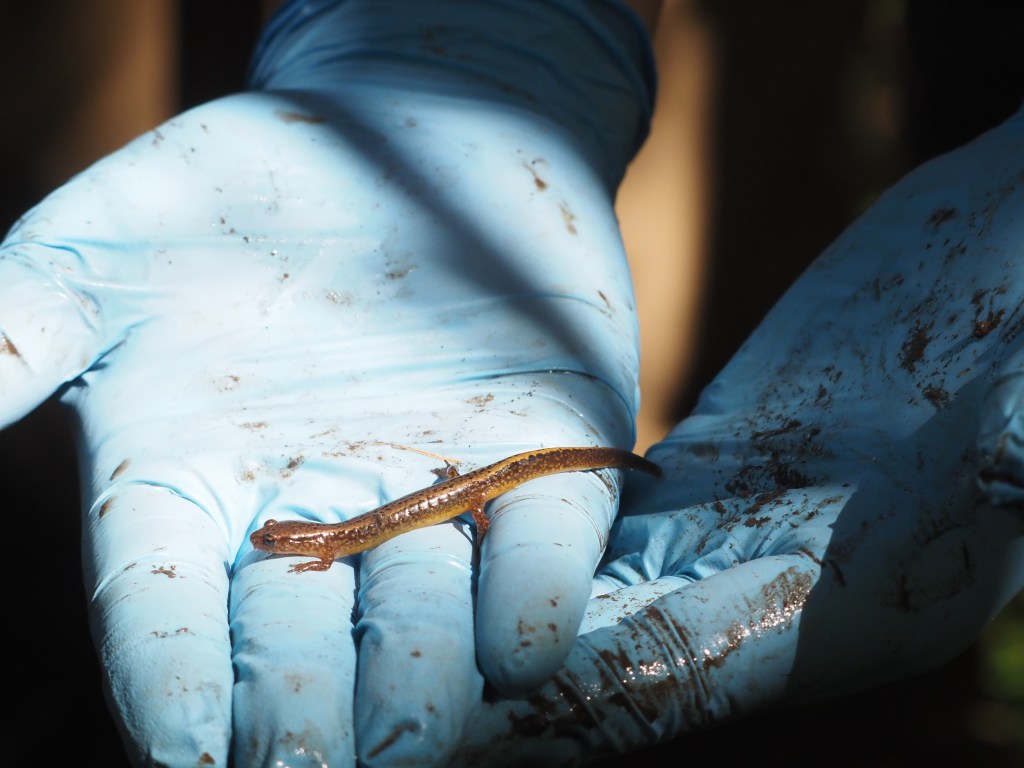
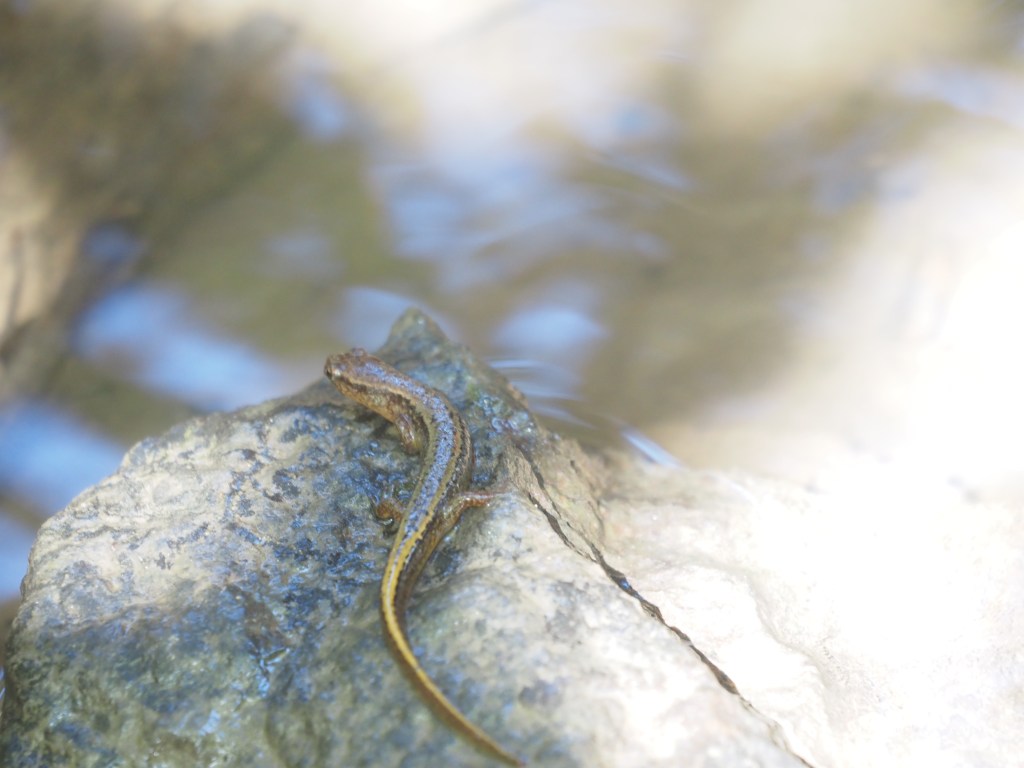
We then went to a nearby stream, this time looking for aquatic salamanders with the help of clear-bottom buckets. The class ended up finding several northern two-lined salamanders, a species I had never seen before!
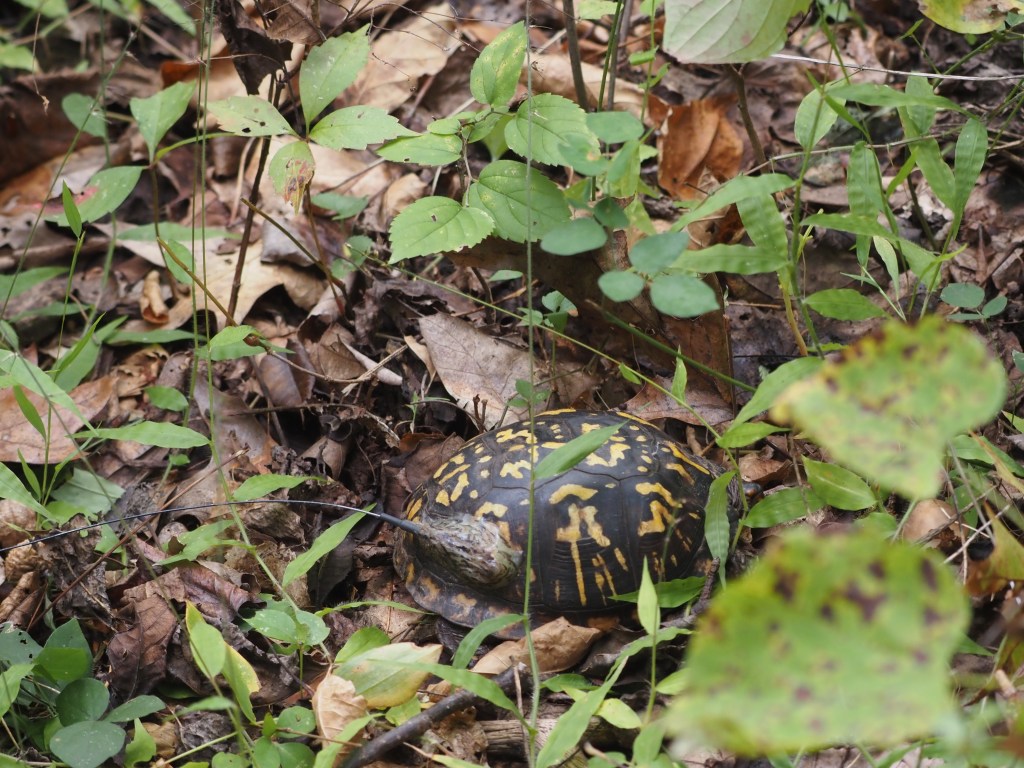
After lunch, we headed back out into the woods. This time, we were using remote sensors and GPS units to locate an eastern box turtle that had been previously tagged. I had actually already gotten to do this earlier in the week as part of my natural history practicum, so had an idea of what to expect (not that this meant it was easy for me!). After triangulating the turtle’s position and much searching, a couple of my teammates (though not me, as we had split up to look) finally located the testudine. I didn’t bother taking any photos as he kept his head in his shell the whole time, but here’s a photo of the one I helped find during my practicum, which gives you the basic idea of what he looked like.
I had a lot of fun doing field research this week. It really felt good to be out in nature, looking for animals using professional equipment and recording our findings just as someone doing this for a job might. Sure, trying to pinpoint the exact location of the box turtle was a bit tiring, but that’s what looking for wildlife is like. Science isn’t supposed to be easy. I definitely felt like I enjoyed the kind of fieldwork we did enough that it is something I would be open to doing as part of my career after I graduate.