The focus of class this week was sampling water in the Shenandoah River and in streams that feed into it. At each stop along the watershed, each team had the same two tasks. The first of these was running a test for the chemical we were assigned (nitrate in the case of my team). The second was purposefully disturbing the riverbed on a very small scale and then using a net to capture any aquatic macroinvertebrates that were stirred up, and then we recorded our findings. The focus of this post will be on this latter task.
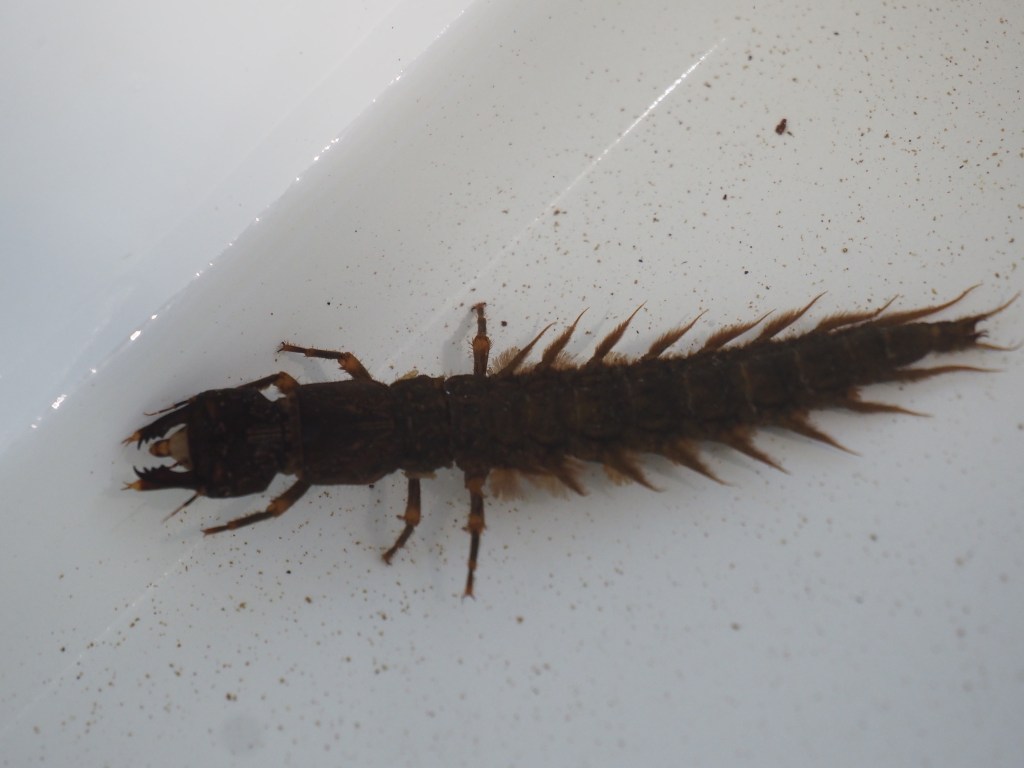
For each of the five sites that we sampled at, we recorded which macroinvertebrate taxa that we found, and how many of each of these. Most of the creatures we collected were relatively small and not particularly visually striking, such as the larvae of mayflies, stoneflies, and caddisflies. At one site, we found a large amount of unidentified bivalves, some of which had bright green on their shells (possibly caused by algae), which was a bit more noteworthy. However, undeniably the stand-outs of our macroinvertebrate-sampling were the eastern dobsonfly larvae, known as hellgrammites. There’s definitely something unnerving about their appearance, not helped by how big they can get. The largest one we found is pictured below. Apparently this species can grow up to 4 inches long in its hellgrammite state, and this individual didn’t look too shy of that (unfortunately, none of my photos provide a great sense of scale).
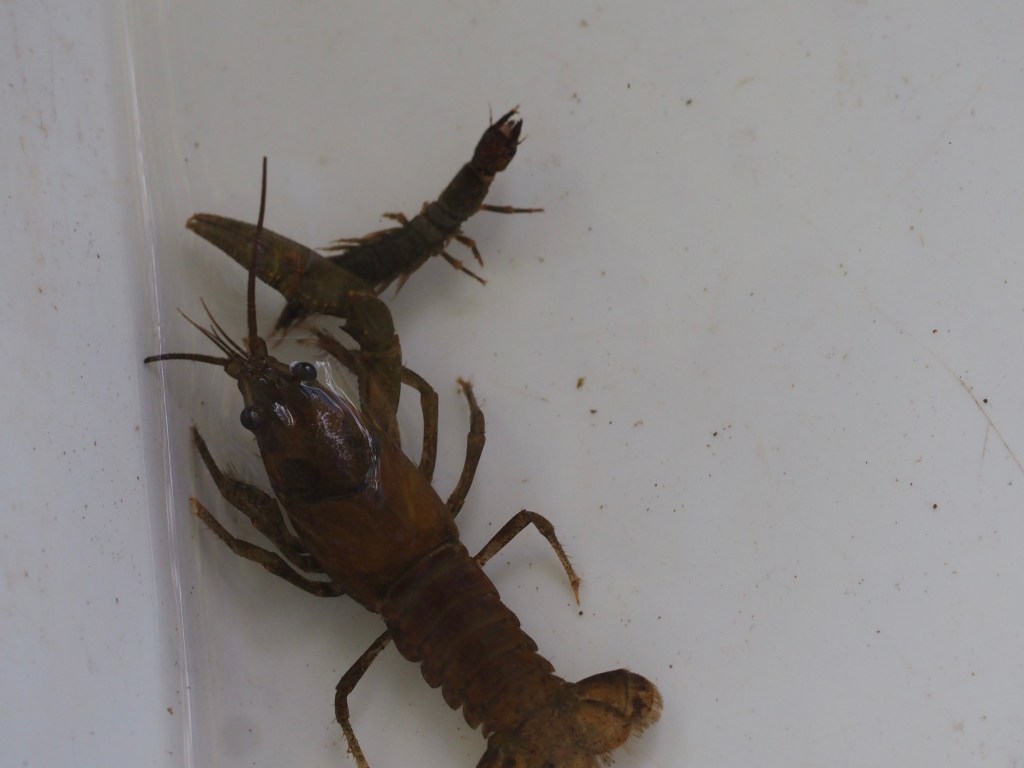
Another very conspicuous (although hardly unexpected) critter we captured was a crayfish, which I believe was specifically a juvenile virile crayfish. While this species is unfortunately a noted invasive species in some other parts of the US, Virginia is thankfully part of its native range. We placed it in the sampling pan with another dobsonfly hellgrammite, albeit one that wasn’t quite as large as the one above. While crayfish are opportunistic predators, and something like the hellgrammite would definitely be fair game for one, this one didn’t seem hungry. Thus, after we were done recording our findings and watching the two invertebrates putter around for a bit, both were safely released back into the river.
Doing the macroinvertebrate sampling has helped me gain a new appreciation for the smaller forms of animal life found in freshwater ecosystems, I feel. Even something as large and seemingly conspicuous as the dobsonfly hellgrammites are not creatures I think I would be likely to ever see without looking for them with our equipment. Thus, I am as always very grateful for the opportunities to experience the natural world in new ways provided by this program!

