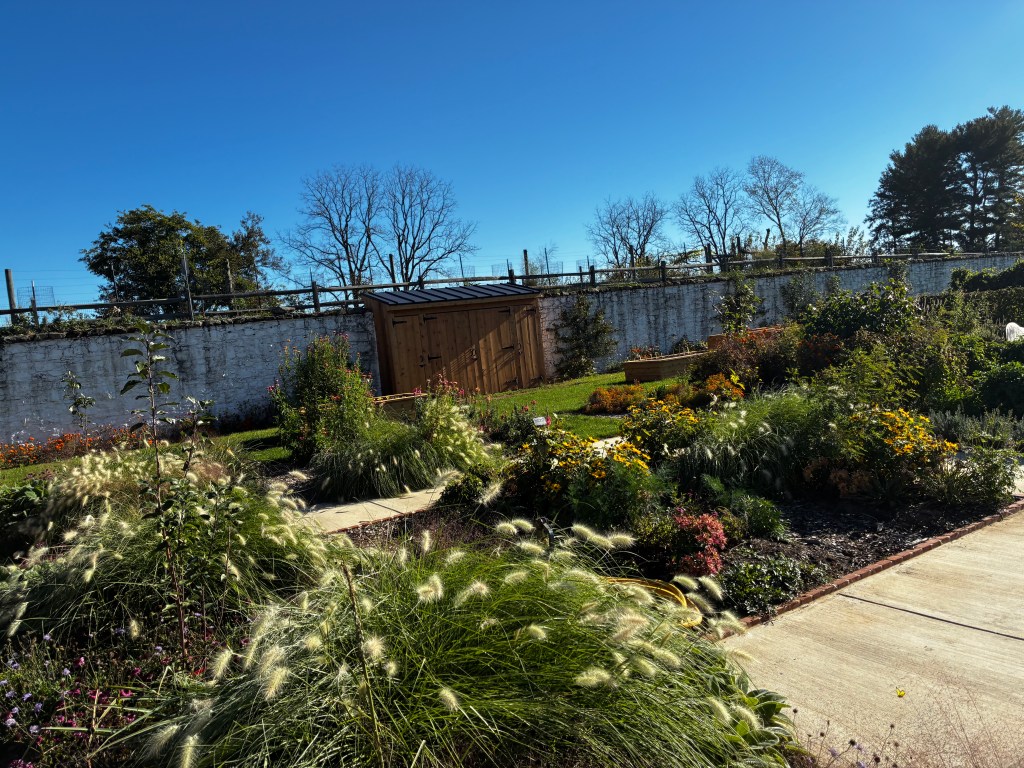
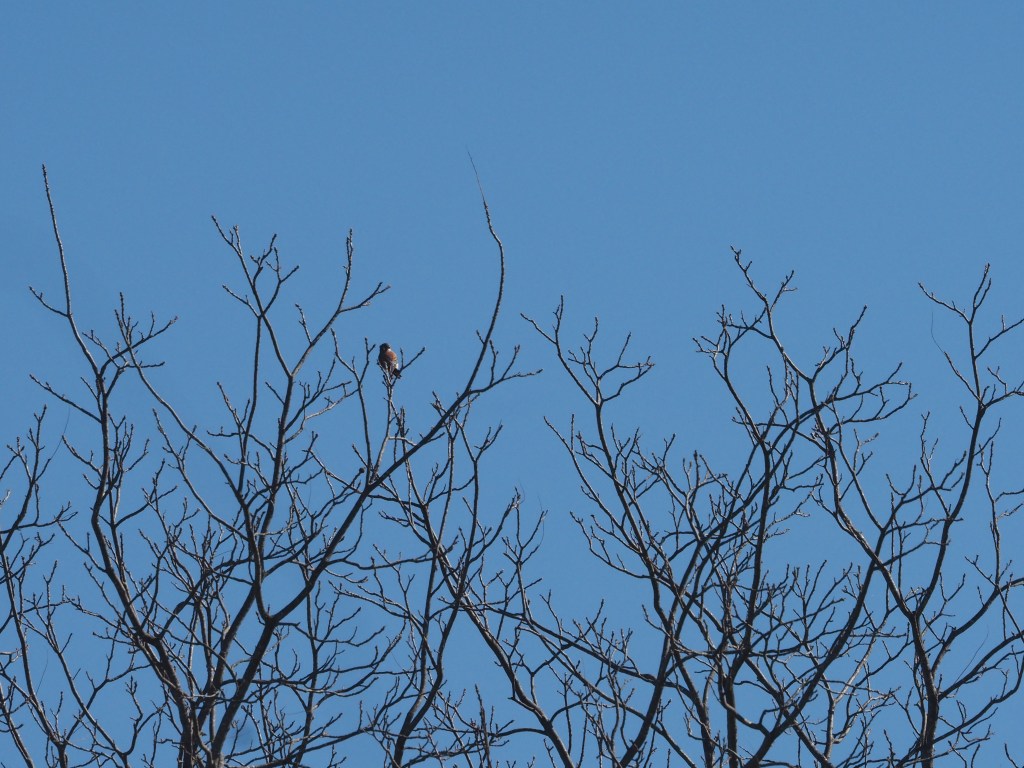
While continuing to learn about land management and how it is used to help humans coexist with nature, this week we visited the Oak Spring Garden Foundation (OSGF). This site is a local farm, growing crops, mainly vegetables, with an emphasis on sustainable agriculture. This means that they grow their vegetables organically and use non-lethal methods to protect them from wildlife, such as the placement of high walls and electric fences. A large portion of their land is also kept as a natural landscape on which research of wildlife and native plants is conducted. One project that our guide highlighted was monitoring American kestrels, a sizable population of which exists on the site. I actually saw one of the small falcons, albeit from a decent distance, perched in a tree.
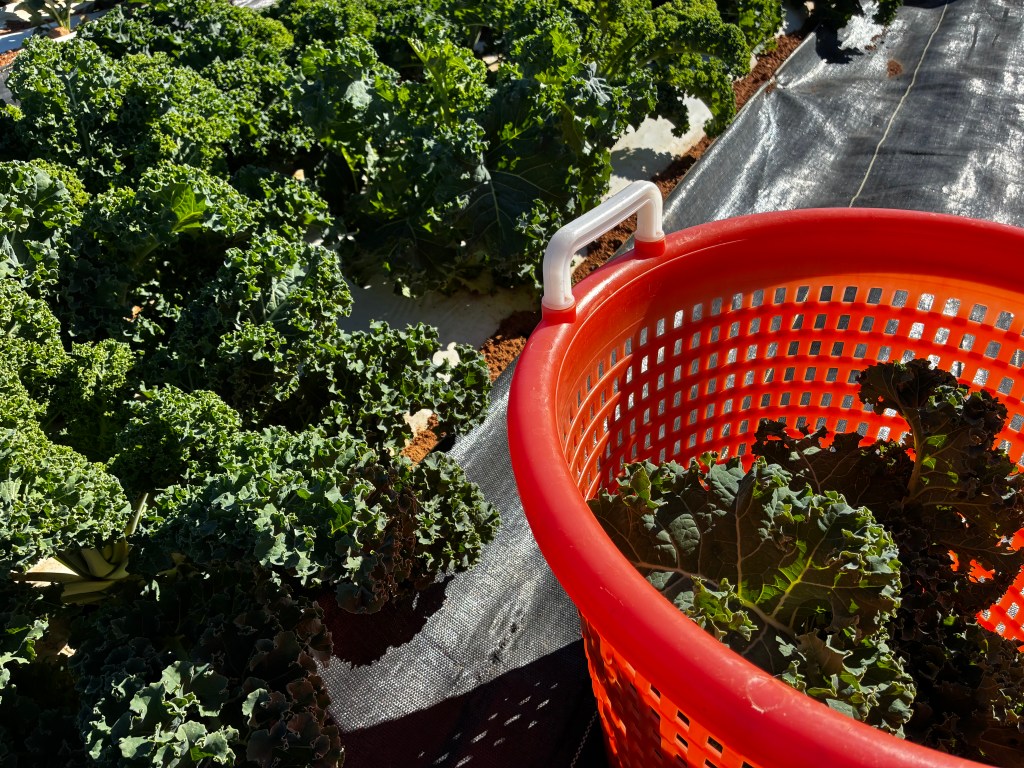
After our tour, we helped to harvest some kale that was to be donated to a food bank. Each person in the class plucked at least one bunch consisting of 8-10 full-sized leaves, with the total yield being more than a dozen. We were even allowed to sample the kale straight-up! The bite I had… didn’t taste the best, but of course it also hadn’t yet been properly washed and prepared.
We typically think of agriculture as being destructive to nature, as natural landscapes are deforested, plowed, or drained to make way for growing crops or raising livestock. But if done carefully, it is possible to grow food for humans and leave room for nature on the sample landscape. It’s just about using the right methods. Permaculture is the official term for farming with minimal alterations to the landscape.
Oh and also, 80% of cropland is also used to grow crops to feed livestock rather than people. It is estimated that if we stopped raising so many animals for food and grew more plants to feed people instead, significantly less land would need to be used for agriculture. That’s just a little food for thought.

